Author: Admin

  • Opaque: What It Means, Why It Happens, and Where You See It Every Day

    Opaque: What It Means, Why It Happens, and Where You See It Every Day

    An opaque object or material does not allow enough visible light to pass through for objects on the other side to be seen. Instead, light striking the material is primarily absorbed or reflected.

    Wood, metal, concrete, and brick are familiar examples of opaque materials. Understanding opacity explains why a wall blocks your view of the next room and why materials behave differently when exposed to light.

    Opacity is also dependent on the type or wavelength of radiation involved. A material that is opaque to visible light may behave differently with other forms of electromagnetic radiation.

    This guide explains what opaque means, the physics behind opacity, how opaque materials differ from transparent and translucent materials, common examples, and why opacity matters in everyday life and industry.

    What Does Opaque Mean?

    Simple Definition

    In simple terms, something is opaque if you cannot see through it. Visible light does not pass through the material sufficiently to produce a visible image of whatever lies behind it.

    A closed door, a brick wall, and most paper are everyday examples. Although these materials differ in composition and structure, they all block enough visible light to prevent you from seeing clearly through them.

    Formal Definition

    More precisely, an opaque material transmits essentially no visible light under the conditions in which it is considered opaque. Light striking it is primarily absorbed, reflected, or scattered rather than transmitted through the material.

    This makes opacity an optical property rather than simply a visual impression. Whether a material behaves as opaque can depend on its internal structure, composition, thickness, and the wavelength involved.

    The Science Behind Opacity

    Absorption, Reflection, and Light Transmission

    When light strikes an opaque object, most of the light does not continue through the material. Instead, it can be absorbed, reflected, or scattered.

    The balance between absorption and reflection also affects how a material looks. A surface that reflects many visible wavelengths can appear white or bright, while one that absorbs most visible wavelengths can appear dark or black. Both can still behave as opaque materials because visible light does not pass through them sufficiently for objects behind them to be seen.

    At the material level, opacity depends on how a material’s internal structure interacts with light. Metals are a useful example: free electrons at their surface interact strongly with light, producing reflection rather than allowing visible light to pass readily through the material. This is why polished metal can look highly reflective while remaining opaque.

    Opaque vs. Transparent vs. Translucent

    Opaque, transparent, and translucent are often confused. The key differences involve both how light passes through a material and whether objects behind it can be seen clearly.

    PropertyTransparentTranslucentOpaque
    Light transmissionAllows light through with minimal scatteringAllows some light through but scatters itAllows essentially no useful visible light through
    Visibility through materialObjects on the other side are clearly visibleObjects appear blurred or indistinctObjects on the other side cannot be seen
    Common examplesClear glass, clean water, airFrosted glass, wax paper, thin fabricWood, metal, concrete, brick

    Transparent materials transmit visible light with minimal scattering, allowing a clear image of whatever is behind them.

    Translucent materials also allow light through, but the light is scattered. This is why frosted glass may reveal shapes or shadows without showing sharp details.

    Opaque materials sit at the light-blocking end of this spectrum. They prevent enough visible light from passing through to make objects behind them visible.

    These categories are best understood as positions along a spectrum rather than completely unrelated properties. Where a material falls can depend on its internal structure, composition, and thickness. The same substance may behave differently under different conditions, such as when a material becomes thin enough for more light to pass through.

    Examples of Opaque Materials

    Wood, metal, concrete, and brick are among the most familiar opaque materials. They are common in construction and everyday objects because they block visibility and can prevent visible light from passing through effectively.

    Other everyday examples include:

    • Most paper
    • Unglazed ceramics
    • Thick plastic
    • Painted surfaces
    • Most fabrics

    These materials differ considerably in composition and structure, but in their typical forms they prevent enough visible light from passing through for objects on the other side to be seen clearly.

    Thickness can matter. For example, most paper is opaque at normal thickness, while very thin paper can allow some light through and behave more like a translucent material.

    Is Opacity Always Absolute?

    Materials Opaque to Visible Light but Not Other Waves

    Opacity depends on the type or wavelength of radiation. A material can be opaque to visible light while behaving differently with other forms of electromagnetic radiation, including X-rays or radio waves.

    The human body illustrates this distinction. Skin and soft tissue are opaque to visible light, which is why you cannot see through them with your eyes. They interact differently with X-rays, while bone blocks X-rays more effectively, producing the contrast used in X-ray images.

    Therefore, opaque should not always be treated as a universal property of a material. A material may be opaque in one part of the electromagnetic spectrum while allowing another type of radiation to pass through more effectively.

    This wavelength-dependent behavior is important when moving beyond the everyday meaning of opacity into areas such as physics, materials science, and medical imaging.

    Why Opacity Matters

    Opacity affects practical decisions in architecture, product design, manufacturing, and other situations involving light and visibility.

    An opaque material may be selected for a wall, curtain, or package when the goal is to block visibility or reduce light exposure. In material selection, opacity may also need to be considered alongside factors such as weight, durability, and cost.

    For example, a window designer generally needs materials toward the transparent end of the spectrum. A packaging designer protecting light-sensitive contents may instead choose an opaque material to reduce light exposure.

    Understanding the transparent-translucent-opaque spectrum therefore helps explain how materials are selected when controlling light and visibility matters.

    It also prevents a common misunderstanding: a material should not be considered opaque simply because it looks solid. Its behavior depends on how it interacts with light, as well as factors such as wavelength, thickness, composition, and structure.

    Frequently Asked Questions

    Is glass opaque, transparent, or translucent?

    Clear glass is transparent because it transmits visible light with minimal scattering, allowing you to see a clear image through it. Other forms of glass can behave differently depending on how they transmit and scatter light.

    What causes a material to be opaque?

    A material behaves as opaque when its structure and composition cause visible light to be primarily absorbed, reflected, or scattered rather than transmitted through it sufficiently for objects behind it to be seen.

    Can an opaque material become transparent?

    A material’s transmission properties depend partly on its structure and thickness. If these change enough, such as when a material becomes much thinner, more light may pass through and its optical behavior can move along the transparent-translucent-opaque spectrum.

    Is wood always opaque?

    Wood is opaque in its typical everyday form because it blocks visible light sufficiently to prevent objects behind it from being seen. As with other materials, optical behavior can depend on conditions such as thickness.

    Why can X-rays pass through the body if the skin is opaque?

    Skin is opaque to visible light but behaves differently with X-rays. Opacity depends on the wavelength involved, so a material can block visible light while allowing other forms of electromagnetic radiation to pass through more effectively.

    What is the difference between opaque and translucent?

    Opaque materials prevent enough visible light from passing through for objects behind them to be seen. Translucent materials allow some light through but scatter it, so objects appear blurred or indistinct rather than clear.

    Are all metals opaque?

    Metals are generally opaque to visible light. Free electrons at their surfaces interact strongly with light, contributing to reflection rather than allowing visible light to pass readily through the material.

    Does color affect whether something is opaque?

    Color reflects how a material interacts with different wavelengths of visible light. Both light and dark materials can be opaque, so color alone does not determine whether an object is opaque.

    Is paper opaque or translucent?

    Most paper is opaque at normal thickness. Very thin paper, however, can allow some visible light through and behave more like a translucent material.

    Why is opacity important in product design?

    Designers may choose opaque materials when they need to block light or visibility, such as for privacy or protecting light-sensitive packaged contents. Opacity can also be considered alongside practical factors such as durability, weight, and cost.
  • Burger King Spongebob Meal: Ultimate 2026 Guide

    Burger King Spongebob Meal: Ultimate 2026 Guide

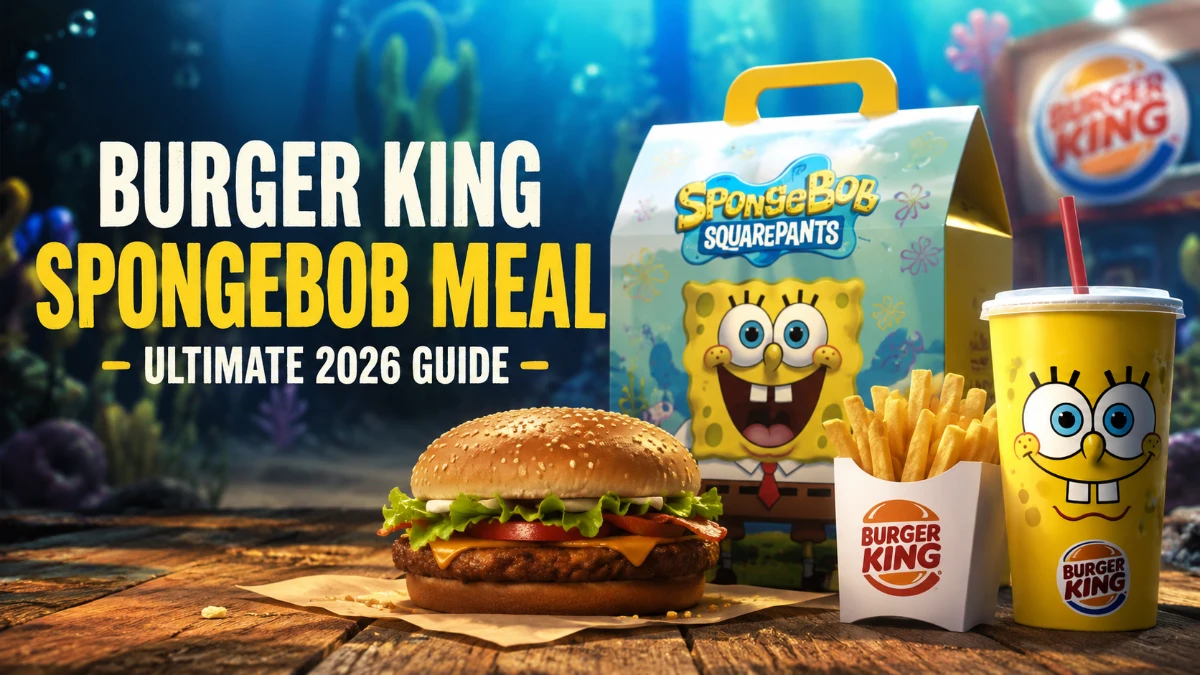
    The Burger King Spongebob meal is a limited-time promotion built around The SpongeBob Movie: Search for SquarePants, featuring the Krabby Whopper, Cheesy Bacon Tots, a Star-berry Shortcake Pie, a Pineapple Float, and collectible King Jr. Meal toys. Pricing and stock vary by location, and several items have already run short at participating restaurants.

    What Is the Burger King Spongebob Meal?

    The Burger King Spongebob meal turns the cartoon’s fictional Krabby Patty into a real quarter-pound flame-grilled beef burger served on a yellow square bun. It launched nationwide on December 2, 2025, roughly two and a half weeks before the movie’s theatrical release, and marked Burger King’s first SpongeBob collaboration since 2007.

    The Story Behind the Collaboration

    Burger King partnered with Paramount Pictures to build a five-item menu rather than a single novelty burger, which is a more ambitious bet than most movie tie-ins take. That extra scope gave the promotion real staying power in conversation, but it also multiplied the number of things that could go wrong operationally — a trade-off that proved costly within days of launch.

    Timing With the Movie Release

    Launching the food before ticket sales opened was the smarter sequencing call, since it let word-of-mouth build ahead of the December 19 premiere rather than compete with opening-weekend hype. That decision is the single biggest reason this promotion generated sustained attention through the holiday window rather than a short spike.

    What Comes in the Burger King Spongebob Meal?

    The Burger King Spongebob meal includes four character-themed food items plus a separate King Jr. Meal for kids, all packaged in a pineapple-shaped “Under the Sea” box. Each item maps to a specific character rather than roughly as a generic tie-in side, an unusually thoughtful design choice for a fast-food collaboration.

    ItemDescriptionBundle Inclusion
    Krabby WhopperQuarter-pound flame-grilled beef patty on a yellow square bunYes
    Cheesy Bacon TotsBacon-and-cheese tots in a treasure-chest cartonYes
    Star-Berry Shortcake PieStar-shaped strawberry dessert pieYes
    Pineapple FloatFrozen pineapple beverageYes
    King Jr. Meal ToyOne of six collectible SpongeBob figuresKids’ meal only

    The Krabby Whopper Breakdown

    The Krabby Whopper carries American cheese, lettuce, tomato, pickles, onions, mayo, and ketchup — the square yellow bun, colored with natural spice, is the only real departure from a standard Whopper. Reviewers have generally agreed it tastes like a well-made flame-grilled burger rather than a secret-formula replica, and treating it as anything more sets up disappointment.

    Bikini Bottom Bundle Contents

    The Bikini Bottom Bundle packages all four adult food items together in the themed box, aimed at fans who want the full Bikini Bottom experience in one order. Buying à la carte instead gives more control over portions and cost, which matters given how calorie-dense the full bundle is.

    Burger King Spongebob Meal Price

    The Burger King Spongebob meal starts around $6.99 for a standalone Krabby Whopper, with the full Bikini Bottom Bundle priced between $14.99 and $19.99, depending on location. That spread is wider than most fast-food promotions, and it reflects real regional pricing variation rather than a single fixed national rate.

    Bundle Pricing vs À La Carte

    Ordering individual items — Krabby Whopper at $6.99, Cheesy Bacon Tots from $1.99, Pineapple Float around $2.59, and the pie at $2.99 — can undercut the bundle price for anyone skipping an item they don’t want. Paying the bundle premium only makes sense if the packaging and full lineup genuinely matter to the buyer, since the food itself is identical either way.

    Calories and Nutrition in the Burger King Spongebob Meal

    The Burger King Spongebob meal is calorie-dense: the Krabby Whopper alone carries roughly 780 calories, and the full Bikini Bottom Bundle totals around 1,550 calories with nearly 2,940mg of sodium. That sodium figure is a legitimate concern worth flagging rather than glossing over, since it approaches the full daily recommended intake in a single meal.

    ItemCaloriesFatSodium
    Krabby Whopper780 kcal49g1,620mg
    Cheesy Bacon Tots260 kcal11g990mg
    Pineapple Float (medium)250 kcal9g110mg
    Star-Berry Pie260 kcal12g220mg
    Full Bundle1,550 kcal81g2,940mg

    How It Compares to a Regular Whopper

    The Krabby Whopper’s calorie count sits close to a standard Whopper’s, since the bun swap is largely cosmetic rather than a nutritional overhaul. Anyone expecting a lighter or heavier item purely because of the movie branding is working from a false assumption — the core recipe barely changed.

    Sodium and Fat Concerns

    Nearly 1,620mg of sodium in the burger alone is a figure that families ordering the King Jr. Meal for children should weigh carefully, especially when paired with tots and a sweetened float. That combination pushes a single kid’s visit well past a sensible daily sodium share for a young child, and it’s fair to call that a real drawback of the bundle format.

    Where Is the Burger King Spongebob Meal Available?

    The Burger King Spongebob meal is available at participating Burger King locations across the United States, ordered in-store, through the Burger King app, or via the website. Availability isn’t guaranteed at every location, and checking the app before visiting saves a wasted trip.

    Ordering Through the App

    The Burger King app shows real-time stock warnings when specific items are running low, which became one of the more reliable ways customers tracked availability during the promotion’s rockiest weeks. Relying on the app rather than assuming in-person stock is the more practical approach right now.

    Is the Burger King Spongebob Meal Still Available?

    The Burger King Spongebob meal launched on December 2, 2025, and was originally expected to run through early 2026 or while supplies lasted, though stock has been inconsistent since the first week. Some locations still carry the full menu, while others have already exhausted key items well ahead of any official end date.

    Why Locations Ran Out So Quickly

    Within about a week of launch, franchise locations began reporting shortages of specific items — some ran out of the Krabby Whopper, others had food but no themed packaging or toys. That inconsistency points to uneven inventory distribution across the franchise system rather than simple across-the-board popularity, and it’s a legitimate execution misstep on Burger King’s part given the promotion’s hard deadline tied to the movie’s release.

    What This Means for Customers Now

    Anyone still hoping to try the Burger King Spongebob meal should check app stock before visiting, since the remaining supply is patchy rather than evenly distributed. Calling ahead or checking online first is now the smarter move than assuming a local restaurant still has the full lineup.

    King Jr. Meal Toys Explained

    The King Jr. Meal includes one of six collectible SpongeBob-themed toys, randomly assigned per order and packaged with a limited-edition crown. Collecting the full set requires multiple purchases, since toys aren’t selectable individually at checkout.

    ToyCharacter Feature
    SpongeBobComes with a spinning wheel
    PatrickIncludes a hook-shaped hat
    Mr. KrabsFeatures a treasure chest
    SquidwardHolds a clarinet
    Gary the SnailStandalone snail figure
    The Flying DutchmanGhost pirate figure

    Reports of customers receiving toys from unrelated past promotions or mismatched regional packaging surfaced during the rollout, which undercuts the collector appeal that makes the King Jr. Meal worth choosing over a standard kids’ meal. That’s a preventable distribution error, not bad luck.

    How the Burger King Spongebob Meal Compares to Wendy’s Krabby Patty Kollab

    Burger King wasn’t first into Bikini Bottom — Wendy’s ran its own Krabby Patty Kollab in October 2024 as a single-burger promotion tied to SpongeBob’s 25th anniversary. Comparing the two shows how differently each chain approached the same license.

    FeatureBurger King Spongebob MealWendy’s Krabby Patty Kollab
    Launch DateDecember 2025October 2024
    Menu Size5 items + toys1 burger + 1 shake
    Bundle Price$14.99–$19.99Around $10.19–$11.99
    Collectibles6 toysNone reported

    Burger King’s broader menu and toy tie-in made this the more ambitious of the two SpongeBob fast-food plays, and that ambition is exactly why its supply problems were more visible — a five-item rollout has five separate points where stock can run thin, while Wendy’s single-burger approach left almost nothing to mismanage.

    Is the Burger King Spongebob Meal Worth Ordering?

    The Burger King Spongebob meal delivers a genuinely creative, well-designed menu on concept but stumbles on execution, making it a mixed outcome rather than a clean win. The Krabby Whopper and themed packaging earn real praise, but a promotion customers can’t reliably find undercuts its own value proposition.

    The Verdict on Value

    At $14.99 to $19.99 for the bundle, the price is defensible given the novelty packaging and toy — but only if the item is actually in stock when ordered. Paying a premium for an experience that’s frequently unavailable is where this promotion’s value case weakens the most.

    Who Should Skip It

    Anyone chasing the full toy set for collection purposes should expect a bumpy path, since random distribution and reported mix-ups make a complete set harder to guarantee than the promotion implies. Casual fans just want to try the Krabby Whopper once, face far lower risk, and get the better end of this deal.


    Frequently Asked Questions

    What is the Burger King Spongebob meal?

    It’s a limited-time menu tied to The SpongeBob Movie: Search for SquarePants, featuring the Krabby Whopper, Cheesy Bacon Tots, a Star-Berry Pie, a Pineapple Float, and King Jr. Meal toys at participating U.S. locations since December 2025.

    How much does the Burger King Spongebob meal cost?

    The Krabby Whopper starts around $6.99 à la carte, while the full Bikini Bottom Bundle runs between $14.99 and $19.99 depending on location and tax.

    Is the bun actually different?

    Yes — the Krabby Whopper’s bun is yellow and square, colored with natural spice, but the nutritional content and taste are close to a standard Whopper bun

    Are the King Jr. Meal toys random?

    Yes, each order includes one of six collectible SpongeBob-themed toys assigned randomly, so getting a specific character isn’t guaranteed per purchase.

    Can adults order the toys separately?

    No — the toys come only with the King Jr. Meal, which is designed for children’s portion sizes rather than sold as a standalone collectible item.

    Is the Burger King Spongebob meal available nationwide?

    It launched nationwide on December 2, 2025, but availability now varies significantly by location due to inconsistent restocking since the first week.

    How many calories are in the full bundle?

    The Bikini Bottom Bundle totals roughly 1,550 calories, with the Krabby Whopper alone accounting for about 780 calories and 1,620mg of sodium.

    Why did some locations run out of items?

    Franchise-level inventory planning varied, leading some restaurants to run short on specific items, packaging, or toys well before others did.

    Can I order the Burger King Spongebob meal through the app?

    Yes — the Burger King app and website support ordering, and the app typically shows real-time low-stock warnings for affected items.

    How does it compare to Wendy’s SpongeBob collaboration?

    Burger King’s menu is larger and includes collectible toys, while Wendy’s 2024 Krabby Patty Kollab focused on a single burger and shake without a toy tie-in.

    Is the Burger King Spongebob meal still worth trying?

    Yes, if available — the Krabby Whopper is a solid burger with fun theming, though buyers should check app stock first given ongoing shortages.